
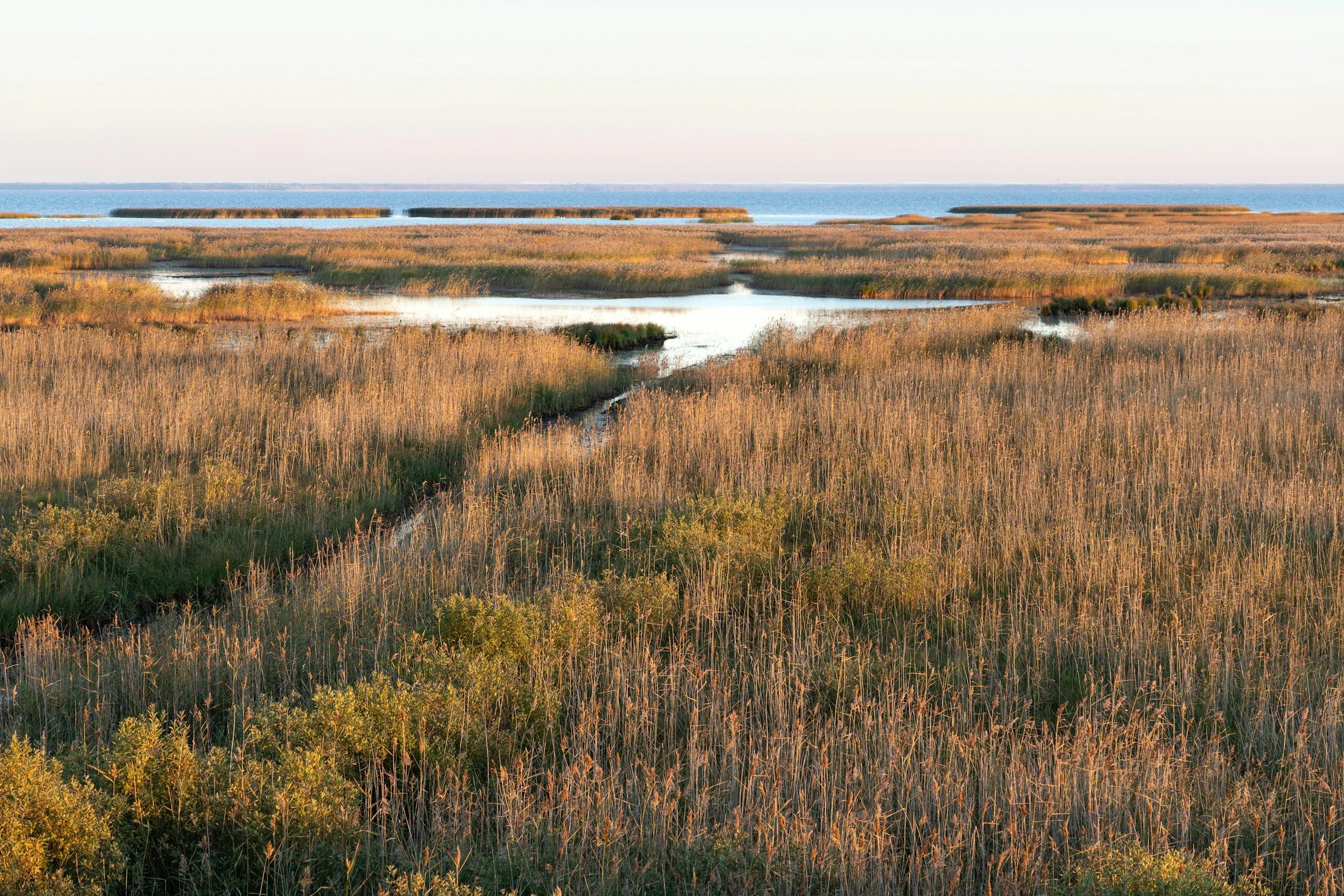
Preparing the scientific and strategic foundation for stronger coastal resilience, wetland protection, and environmental decision-making in Nova Scotia.
Blue Maritimes is developing a readiness assessment to identify where baseline data, mapping, monitoring, and applied environmental science can best support coastal resilience work in Nova Scotia. This project helps determine what data already exists, what gaps remain, which sites may be most relevant, and what methods are needed before field-based work or larger mitigation and restoration projects move forward.
What this project does?
This assessment brings together scientific literature, spatial data, policy context, and site-screening criteria to support better environmental decisions. It is designed to reduce uncertainty before fieldwork begins and to make future investments in baseline studies, monitoring, restoration planning, and compensation support more targeted and defensible.
Core activities
Scientific review
Review relevant research on coastal wetlands, blue carbon, hydrology, restoration, monitoring, and comparable coastal systems.Spatial screening
Use maps and environmental data to identify coastal and wetland areas with strong relevance for resilience, restoration, mitigation, or monitoring.Site prioritization
Develop criteria to compare candidate sites based on ecological value, feasibility, risk, data gaps, and potential public benefit.Implementation readiness
Prepare the technical foundation needed for future baseline studies, fieldwork, monitoring plans, and partner-facing project proposals.
Why it matters
Coastal and wetland ecosystems provide public value through flood protection, carbon storage, biodiversity, water quality, and climate resilience. But strong environmental decisions require strong baseline information. This readiness assessment helps Blue Maritimes and its partners move from broad concern to practical, evidence-based action.
Expected outputs
Readiness assessment report
GIS and spatial screening package
Candidate site prioritization matrix
Methodological recommendations
Policy and funding context summary
Implementation-ready pathway for future field-based work
Who this supports
This project is designed to support conservation organizations, municipalities, public agencies, researchers, funders, and community partners interested in responsible coastal resilience, mitigation, restoration, monitoring, and environmental compensation planning.